Intensely International- Blog Post 3

This weekend, Laurie and I took a short trip to Karlsruhe, Germany. I don’t know a lick of German, but I didn’t know when else I’d get a chance to go to Germany so I leapt at the opportunity. We took the bullet train there and back and while this may sound silly, I thought it’d feel faster. It didn’t feel that different from taking an Amtrak to me.
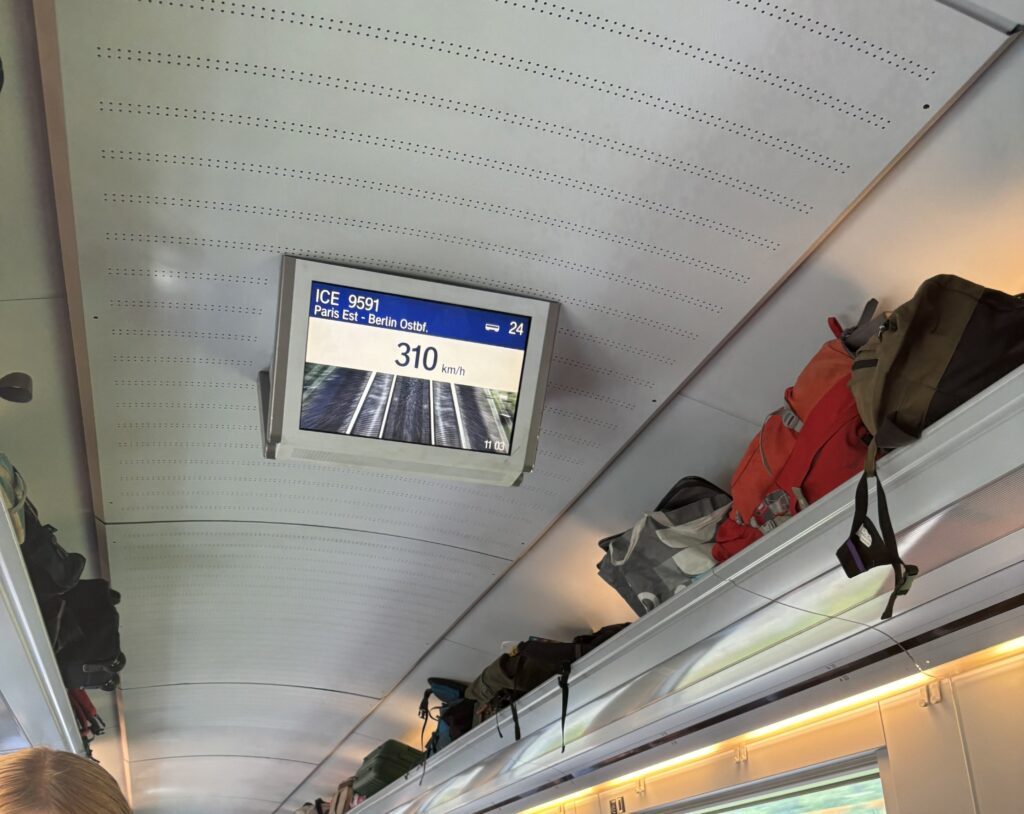
The highest speed I noticed on the Deutsche Bahn train, around 190mph.

After arriving, we managed to get to the trolley stop near our hotel and the town hall. To our complete surprise, there was a market in full swing in the plaza. Due to Laurie’s German knowledge and the sheer number of different flags on display, we realized it was an international festival led by different local immigrant services, taking place on our first day in Karlsruhe.
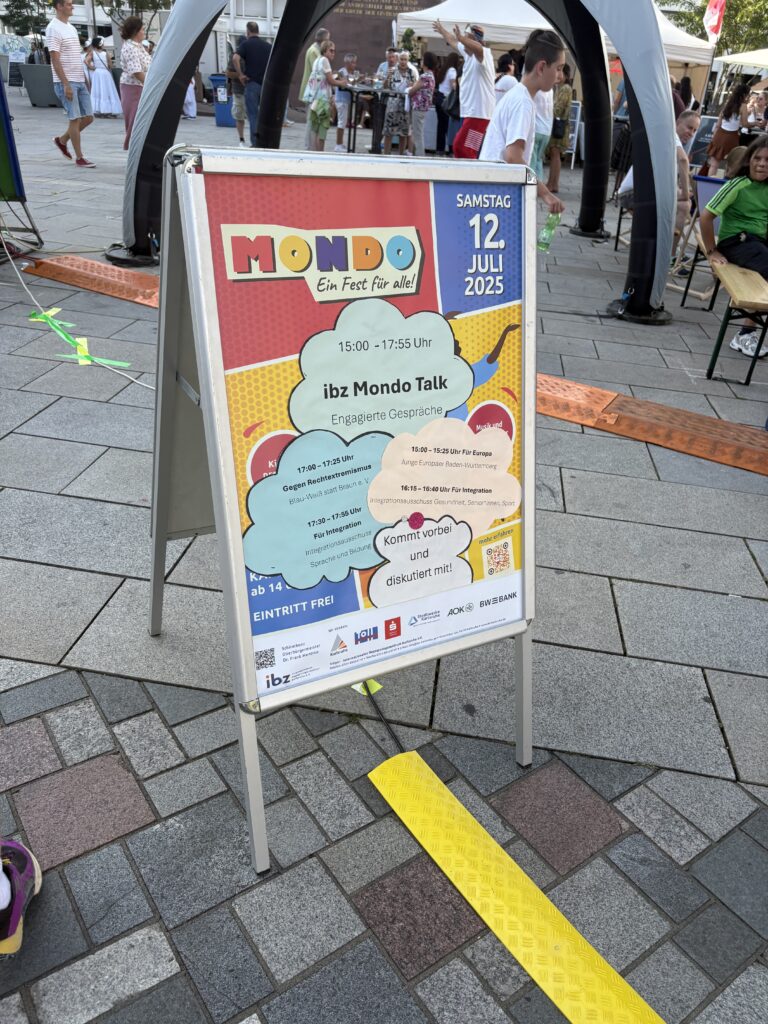
A poster advertising the event.

There were booths with food from various countries, others advertising various services for the community, as well as booths for people to discuss different topics like religion. We got food from an Eritrean stall that was flavored to perfection and sat on some steps to just take it all in (and enjoy the irony of being at an international event in a completely foreign country). We stayed there for almost three hours, transfixed, only moving spots every now and then to get closer to the stage and see the various dances.
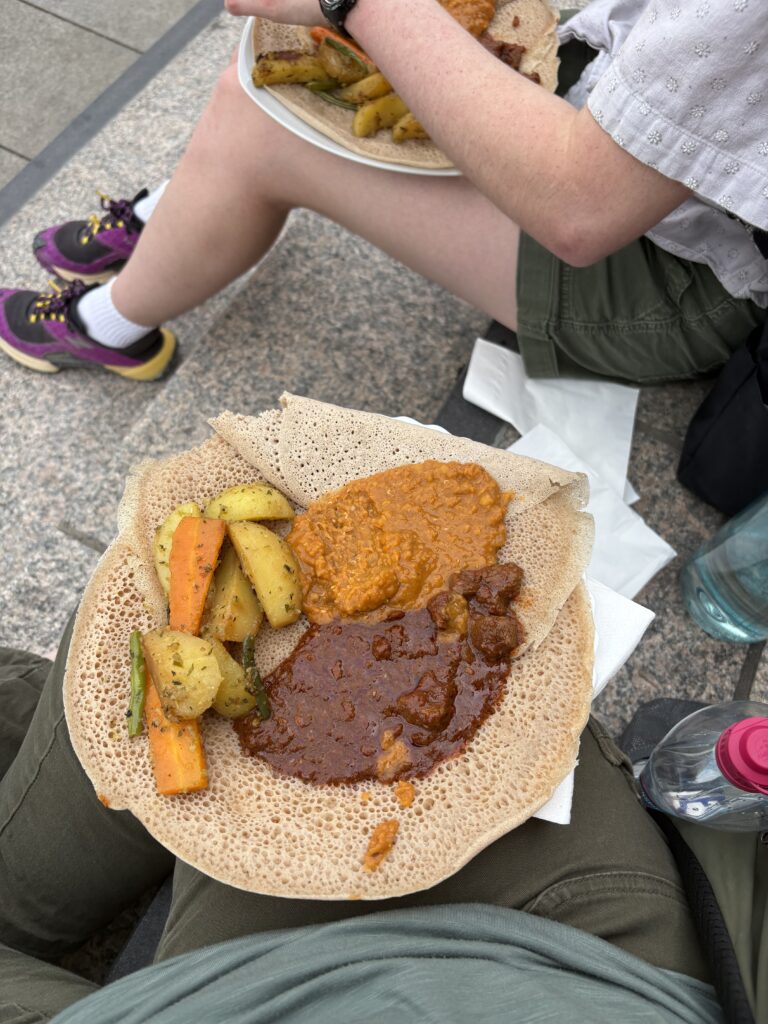
Eritrean food, consisting of a thin spongy bread, two stews, and some cooked vegetables.

I remember there was a group who advertised that all ten of them were from different nationalities and had become friends through a shared love of dancing, and we watched as they taught the crowd in front of the stage the moves of their dance so everyone could join in (and a large number did!) It felt like a perfect microcosm of the whole event. Even when I sat in our hotel room typing this, I could still hear live music and talking outside as people continued to celebrate.
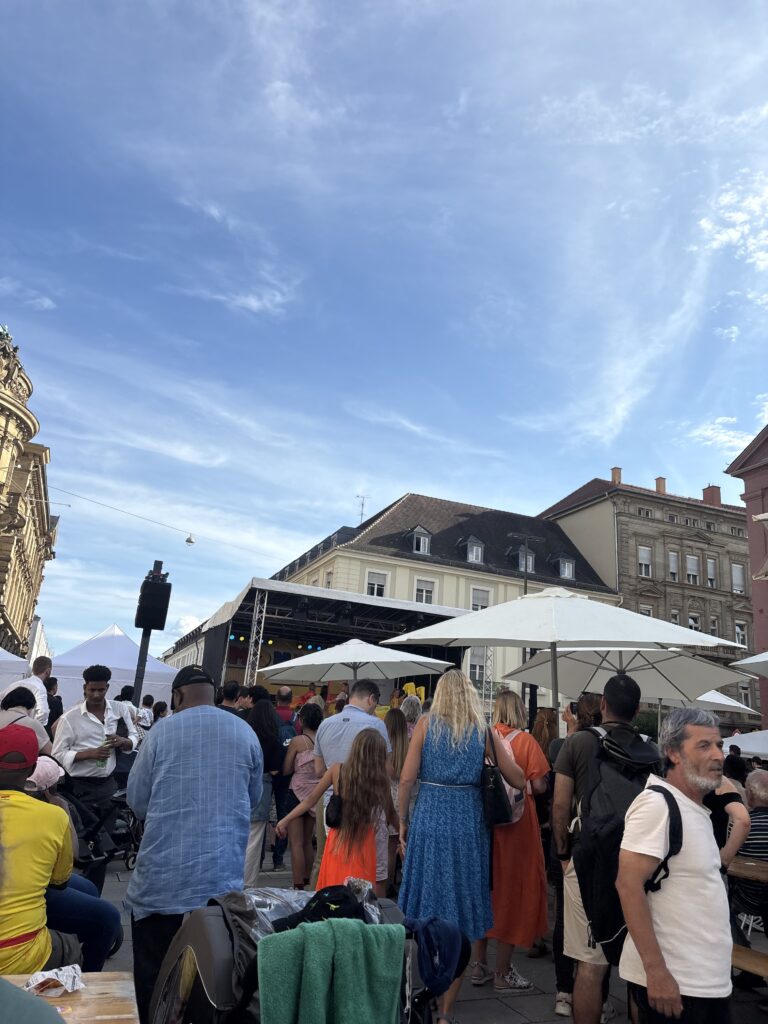
The view of the stage.

Something I noticed upon returning is just how familiar I’ve become with Paris. I’m confident in navigating the metro, know how to stumble through most basic interactions with only a few words of French, and am usually able to recognize buildings and areas and orient myself when walking around. It felt like everything was reset to zero in Karlsruhe. The town seemed to mostly get German tourists so not everyone knew English, without the radial fan layout of Karlsruhe I would have gotten completely turned around, and more often than not I had to rely on Laurie to translate to understand what was happening (thank you Laurie!) But at the same time, I’m more than grateful that I got the chance to take this trip.
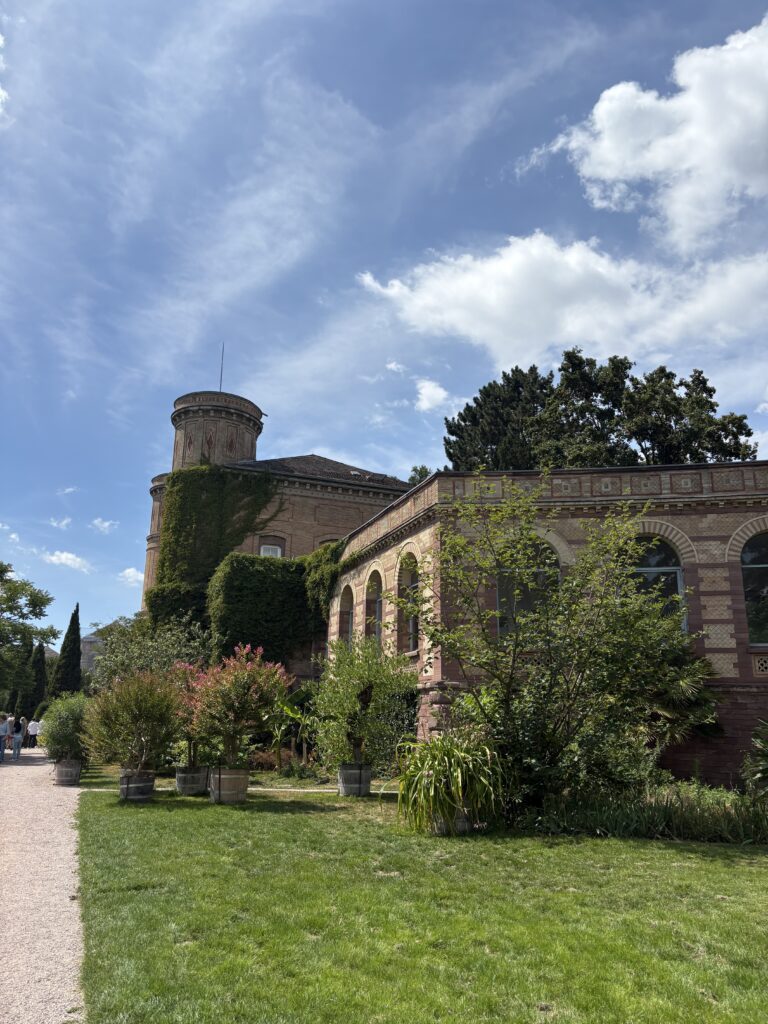
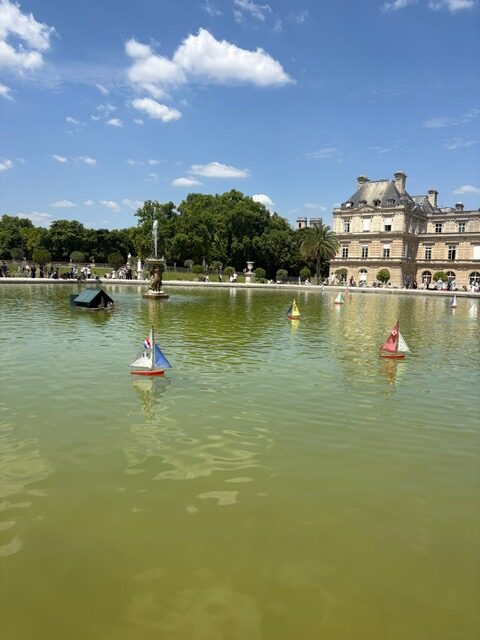
Karlsruhe Botanical Gardens.

Gardens Galore- Blog Post 2

Today we went to the Luxembourg Gardens. We had already been last week at the MICEFA picnic, but I hadn’t realized the scale of the park until today. There are tennis courts, restaurants, bathrooms, an apiary, an orangery turned into a museum, a small exhibit space, a garden where new fruit strains are experimented on, seats by the fountains, seats in quieter areas, nice patches of grass to picnic on, a courtyard full of elderly people playing pétanque, and a playground full of children running around. I even saw a line of kids riding ponies! There was truly something for everyone to enjoy.

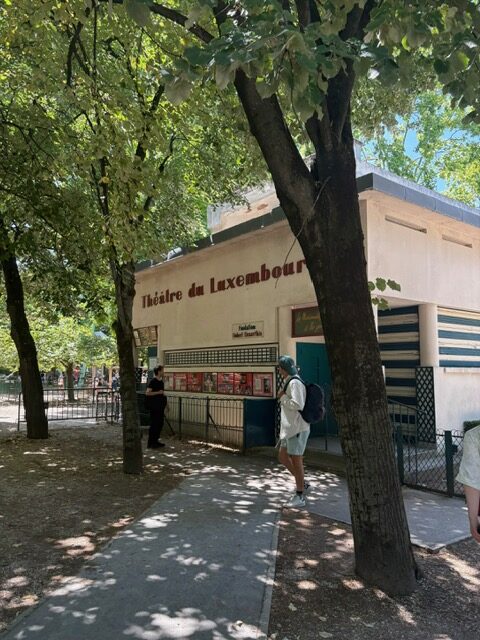
Something about all the activities for kids was extra delightful in how long they’d been around. Miniature boats have been rented for kids to sail in the fountain since the 1850s, the same carousel has been in use since the 1870s, and a theater from the 1930s still has a daily marionette show. A small fee is charged for all of these, as well as to enter the fenced in playground, but considering the park is free it felt reasonable. I’ve been charged more to visit National Parks or gardens at home.

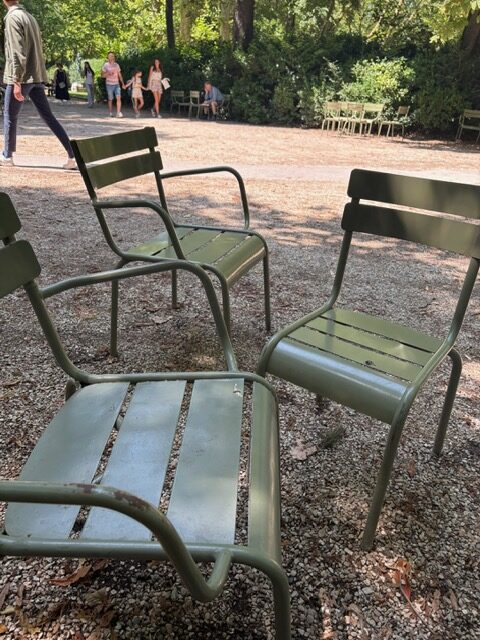
Even the amount of chairs was mind-boggling to me. In the English garden section chairs were spread out along all the paths, and people were sitting and chatting, reading, or sleeping. It was great to head back into the gardens after visiting the Pantheon to wander around, talk, and enjoy the view.

In my experience with parks in the US, they tend to mostly be trail parks. You might find the occasional little green with a playground and some picnic tables, but it’s mostly hiking trails. This fits with how America likes to lean into the idea of conservation and preserving nature like with the National Parks, as opposed to the clearly manicured trees and lawns found in France. As for dedicated gardens in the US, my only real encounter would be the Lewis Ginter Botanical Gardens. I admittedly have a special place in my heart for Lewis Ginter, with its gorgeous conservatory and yearly holiday light display, but there’s never really much too much to do. You can wander around, see if they have a temporary art exhibit, and go up into a large treehouse, but they rarely have anything more. What they do have tends to be temporary and requires even more money than the original entrance fee. There are no boats sailing in the pond, no games being played in an open field. It’s not what the space was meant for, but it still feels like opportunities are being lost.

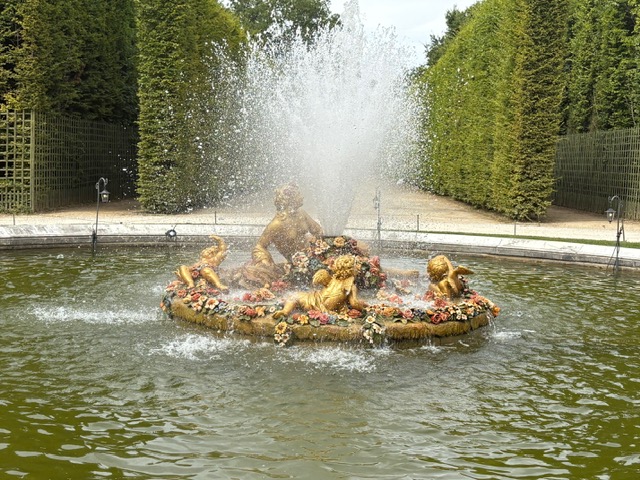
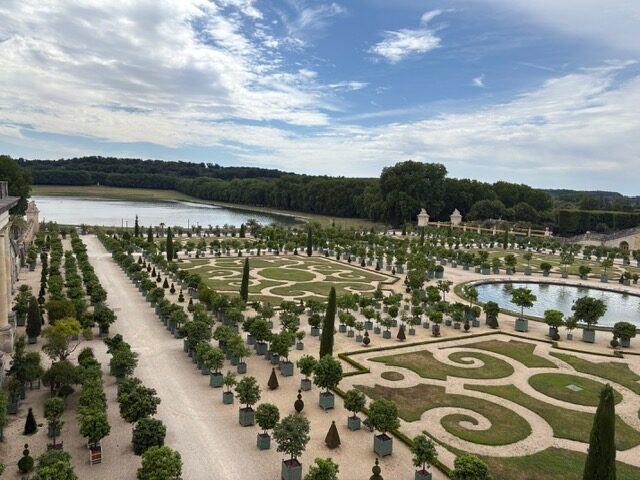
My experience at the gardens at Versailles was also completely different. Versailles had incredible sculptures, fountains, and landscaping, but there was nothing comfortable about it. It could’ve been that I was exhausted after the earlier crowds inside the palace or that I could feel blisters starting to form on my feet, but it felt like there was never enough seating or spaces to sit and just enjoy the garden. The only fountain I even remember having seating near it was Les Belles Dances, which was added in 2015. It was meant to be beautiful, not welcoming.

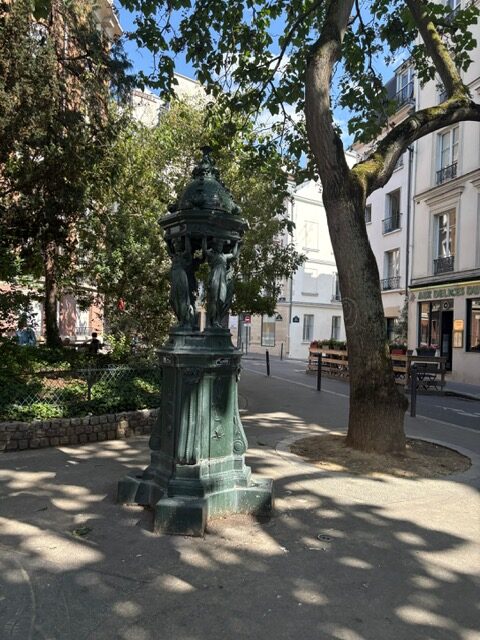
Wallace Fountains

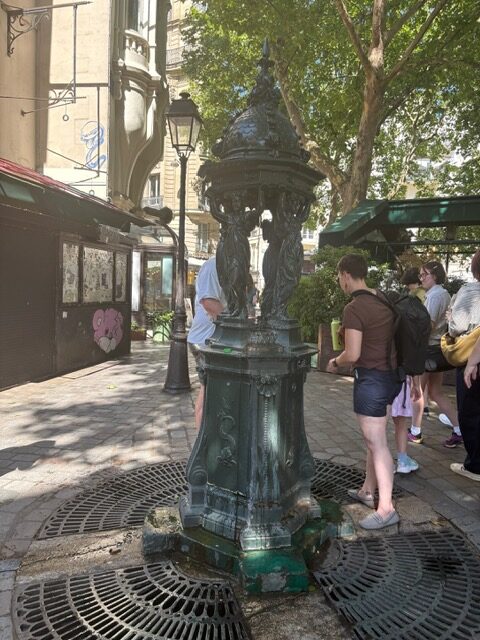
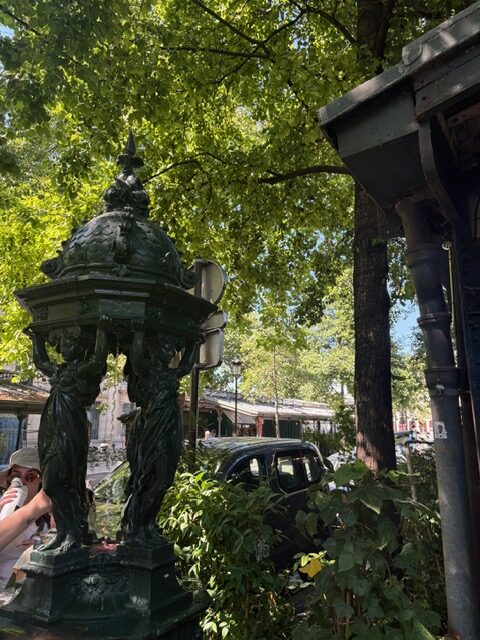
Another fountain has been located! It was near Rue Thouin and Rue de l’Estrapade.

Bonjour, Paris!- Blog Post 1

Week One Complete!

I’ve now officially spent a week in Paris! I’m baffled at how many things we’ve seen already and how many we’ve yet to see, and I want to take in every bit of it I can (at least to a reasonable extent, there’s only so much walking I can handle).

Design That Speaks

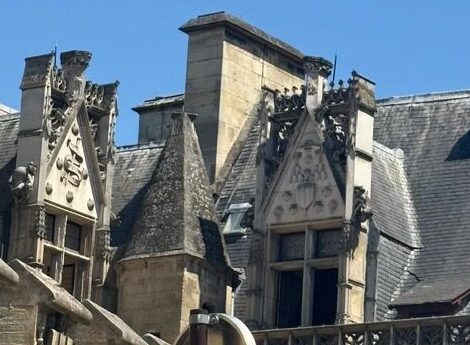
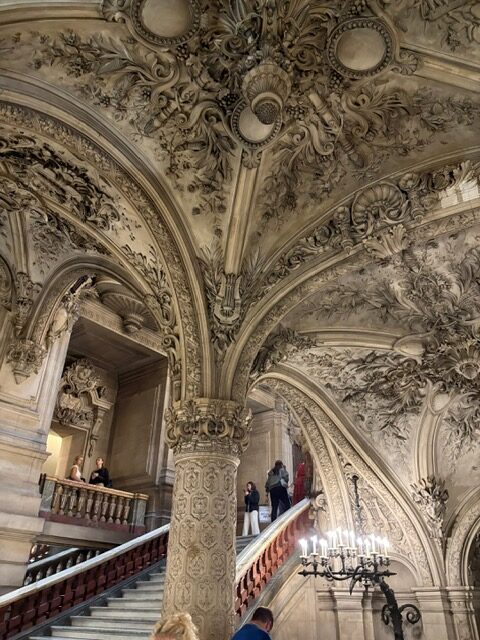
Throughout the week Professor Smith has pointed out different examples of “architecture that speaks”. For example, an old medical school had snakes carved in the detailing as a reference to the Rod of Asclepius and the Greek god of medicine, which would have helped people locate a medical building in a similar way to how we look for a red cross (or green in Paris) when looking for medical help. The Wallace fountains also use details like fish and shells to show a connection to water and their purposes as drinking fountains in the same way some water fountains or water bottle refilling stations will have a water drop to show their purpose. It’s also been fun to search for examples of this on my own, like all of the references to Louis XIV and the monarchy at Versailles and the references to dance and music hidden in the myriad of details in the Opera Garnier. The scalloped shells on the medieval section of the Musee de Cluny might just be my favorite example of this that Professor Smith talked about. In a country with a population that was mostly illiterate, how would you say what a building was, particularly for those not from the city? The scallop shell is a symbol of the Camino de Santiago, the pilgrimage leading to the tomb of St. James and certain places along the route would have a configuration of scallop shells in the stonework, indicating pilgrims could stop there. While pilgrims may not have been familiar with the area or have known how to read, the shells required no translation and they would know it was a place they could turn to along their journey.

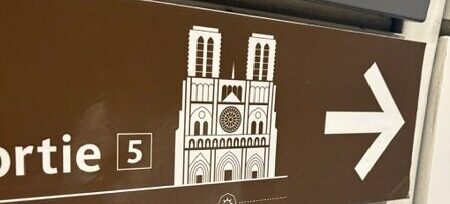
A little detail I noticed in the past few days was how for some famous sites and tourist attractions around the city (Notre Dame, Catacombs, etc.), the signage in the metro will include an icon representing that site. They’re simplified, but with enough detail to be instantly recognizable if you know what you’re looking for. I assumed at first it was just a fun little detail, but remembering the scalloped shells, I began to wonder if there was more to it. Out of all the examples I’ve seen so far, the illustrated signs were to major tourist attractions, the kind that draw in tourists from all over the globe. Literacy rates are far, far better than what they were hundreds of years ago and a good number of languages use Roman letters, either as a central part of their language or as a different script. But at the same time, I can attest to the fact that when in a new place surrounded by a language you don’t necessarily know, it can get overwhelming quickly. I could find and read the words Notre Dame on a sign and know which way to exit the metro station, but my eyes were drawn to the sign far quicker when there was a giant drawing of the cathedral itself on it. It’s a delightful callback, intentional or otherwise, to this clever method of ensuring everyone can find where they’re going just a little bit easier.

Wallace Fountains

I adore the Wallace fountains and want to find more, even if they do all look the same and even if there are 107 of them. It may fall apart, but I currently plan to add a little section to my next blog post each time I find a new one. Currently I have:

Where Rue Danton and Rue Hautefeuille intersect.

Near the flower market.